Drug abuse remains a major driver of youth violence in Niger State, DAILY POST findings have shown.
This report is based on visits and interviews conducted by our correspondent across Minna metropolis and surrounding communities, including Maitumbi, Tunga, Kpakungu, Angwan-Daji, Limawa, Western Bypass axis, M.I. Wushishi Estate, Chanchaga and areas around the College of Education.
What emerges is a deeply interconnected system where drug abuse, illegal mining and youth gang violence reinforce one another across Niger State communities.
“We Used To Play Together… Now We Run From Each Other” – Residents
In Angwan-Daji and Limawa, residents say childhood friendships have broken into violent rivalries.
“Some of these boys grew up together. They attended the same school. Now if they meet, it can end in bloodshed,” Fatima, a resident, said.
Communities such as Maitumbi, Kpakungu, Tunga, Angwan-Daji, and Limawa remain recurring flashpoints for clashes often triggered by reprisals, territorial disputes and personal disagreements.
Field findings indicate that some conflicts arise from personal issues, including disputes over relationships or girlfriends, which sometimes escalate into wider gang confrontations and violent reprisals.
Investigations show that youth violence in Niger State is driven by multiple interconnected factors.
These include unemployment and poverty, drug abuse, illegal mining opportunities, and group rivalries within and between communities.
DAILY POST also gathered that informal drug networks influence how some groups operate, including efforts to support members when arrested, which in some cases affects enforcement outcomes.
Drug Abuse: A Growing Catalyst
Across Niger State, the National Drug Law Enforcement Agency (NDLEA), through its State Commander Shehu Gwadabawa, warned that drug abuse remains a key driver of youth violence in communities.
He explained that despite sensitisation campaigns carried out in Minna including schools, churches, mosques among others, and across its seven outposts in various local government areas, the trend continues to increase.
Gwadabawa said drug use often begins with experimentation before progressing into addiction and aggression adding that 97% of drugs consumed were brought into the state from Ondo and Delta states
“Most parents are not aware their children are into drugs until it is too late. They need to watch over their children carefully and take necessary measures against this trend,” he said.
The state NDLEA Commander listed cannabis (marijuana), Colorado, and shisha as some of the drugs widely used, noting that in some cases substances are used to initiate or influence vulnerable young people, particularly girls, into deeper drug dependence.
Voices From The Streets
A 21-year-old drug user Mustapha (not real name) in Maitumbi said, “It started with small cannabis. Everybody was doing it. It made us feel strong and fearless.”
Another user added, “When you are high, everything looks disrespectful. That’s how fights start.”
An ex-user in rehabilitation said,
“At some point, you don’t even know why you are angry. Drugs control everything.”
Pausing, he added, “Some of my friends are dead. Some are in prison. Only a few got out.”
Drugs And Violence- A Linked Cycle
The NDLEA Commander noted that drug abuse and gang violence at mining sites are closely linked.
“They all go hand in hand. When these youths are high on drugs, it leads to gang fighting, even at mining sites in the state,” he said.
However, Gwadabawa said insecurity and logistical constraints also affect enforcement after arrests and during investigations, noting that securing convictions in court often becomes a major challenge.
“Most times we need to go after these dealers at night, but because of insecurity in Niger State, we cannot move freely,” he said.
Illegal Mining: A Security Flashpoint
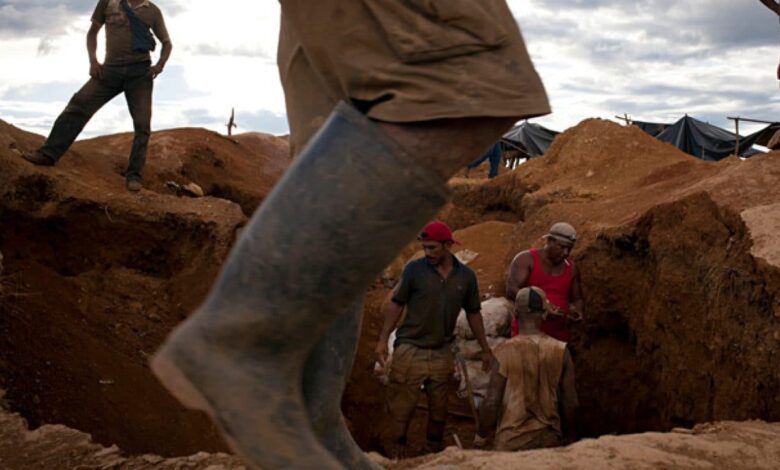
The Nigeria Security and Civil Defence Corps (NSCDC), Niger State Command, led by Commandant Suberu Siyaka Aniviye, says illegal mining sites have become increasingly difficult to control.
The Command’s Public Relations Officer, Abubakar Muti, said the corps is actively monitoring illegal mining activities across Minna and surrounding areas.
Identified hotspots include Western Bypass (M.I. Wushishi axis), Maitumbi corridor, Chanchaga Bridge, and areas near major institutions.
“Rival groups frequently engage in violent clashes at mining sites,” he stated.
Locals, Outsiders, Women And Children In Mining Spaces
Field investigations and residents’ accounts indicate that illegal mining sites around Minna are made up of both local youths and individuals believed to have migrated from other regions in search of economic opportunities.
Residents say this mix sometimes increases competition over mining spots and contributes to tensions at sites.
Women are also present within some informal mining environments, often involved in small-scale activities or supporting roles.
In some locations, residents further report that women are seen working in mining areas alongside their children, reflecting the informal and unregulated nature of the sector where entire households are drawn into the same economic space.
State Government Response
In a statement, the Niger State Commissioner for Mineral Resources, Alhaji Mohammed Qasim Danjuma, said the ministry has intensified collaboration with key security agencies as part of renewed efforts to curb illegal mining and address its growing security implications across the state.
In a series of engagements earlier in the year, the Ministry held strategic meetings with the Nigeria Police Force, the Department of State Services (DSS), and the Nigeria Security and Civil Defence Corps (NSCDC), calling for stronger inter-agency coordination to clamp down on illegal mining activities.
Officials of the Ministry stressed that illegal mining has moved beyond an economic concern to become a serious security challenge, often exploited by criminal elements operating within and around mining communities.
They noted that these activities not only undermine state revenue but also contribute to rising tensions and instability in affected areas.
The Department of State Services (DSS) similarly warned that a significant proportion of insecurity in Niger State is linked to illegal mining operations, while the NSCDC described enforcement as a continuous and demanding task requiring sustained joint operations and stronger field presence.
Civil Society Voice
A Program Officer of Advocates Without Borders, Minna-based CSO, Mairo Mohammed Allawa, says drug use is deeply present in mining-linked environments.
“Let me shock you, children as young as 12 years are there working under the influence. It is happening every day and everywhere in Minna,” she said.
Allawa added that violence often breaks out in such environments.
According to her, “Drug clashes usually break out and get people scared. Residents are afraid for their lives when violence breaks out”.
She noted that many youths are driven not only by unemployment but by the need for quick money to sustain drug use.
“People say it is unemployment, but it’s because they want to work. They end up where they can get quick money to finance drugs,” she said.
“We Arrest Them, But They Return” — Police
The Niger State Police Command, through its Public Relations Officer SP Wasiu Abiodun, said raids on gang hotspots remain frequent.
“We carry out raids almost weekly. We recover weapons and drugs. But prosecution and reintegration remain major challenges,” he said.
He added that suspects often return to the same communities after bail. “It becomes a revolving door. Arrest today, back on the street tomorrow.”
Field findings also indicate that in some cases, pressure from families or influential individuals affects how gang-related cases are pursued.
Human Consequence: Lives Behind The Violence
A mother (name withheld) in Tunga-Goro, Chanchaga suburb of Minna, who lost her son said:
“I warned him. I begged him. But he said those boys were his family. One night, he didn’t come home again.”
A father in Maitumbi, on condition of anonymity, added: ” We buried him, but the boys who did it are still around.”
A resident in Limawa said fear now defines daily life, “When they start fighting, we just lock our doors and wait.”
Beyond arrests and raids, findings from Minna suggest that the crisis is sustained by overlapping pressures across enforcement and justice institutions.
The police, NDLEA, and NSCDC all face difficulties in translating arrests into convictions.
Officials and field sources point to the bailable nature of many offences, technical gaps in investigations where suspects are not firmly linked to exhibits, and procedural weaknesses that weaken cases in court.
Stakeholders also point to external pressures in some cases that may affect prosecution outcomes.
Together, these challenges create a critical break between arrest, prosecution, and conviction, weakening deterrence and allowing cycles of violence to persist.
The crisis in Minna reflects a deeper structural breakdown where drug abuse fuels aggression, illegal mining creates conflict economies, and weak enforcement allows cycles of violence to persist.
Until enforcement becomes fully coordinated and the justice system delivers consistent deterrence, the cycle remains intact: drugs, mining disputes, and thuggery continue to shape the streets of Minna.