
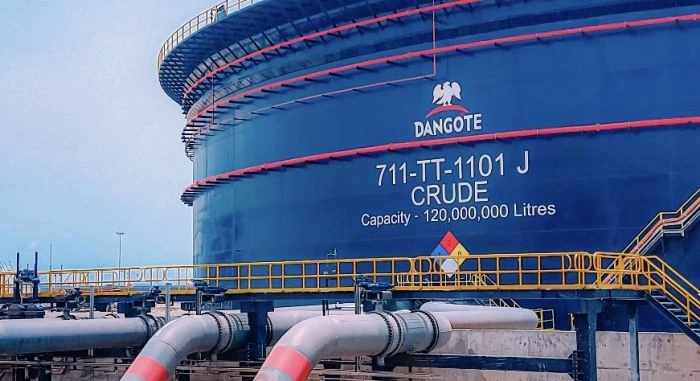
The Nigerian Midstream and Downstream Petroleum Regulatory Authority is weighing its next move to avoid losing regulatory authority over midstream and downstream companies operating within free trade zones.
Last week, a Federal High Court in Lagos issued an interim injunction restraining the NMDPRA from shutting down or interfering with the operations of the Dangote Petroleum Refinery in the Lekki Free Zone, Lagos.
Justice Akintayo Aluko made the order while ruling on a motion ex parte marked FHC/L/CS/1174/26, filed and argued by counsel to Dangote Petroleum Refinery Nigeria Limited, led by Olawale Akoni and Abimbola Akeredolu.
The refinery had approached the court following a letter dated August 24, 2026, in which the NMDPRA allegedly directed the suspension of the loading and truck-out of petroleum products from the facility.
In his ruling, Justice Aluko said he had carefully considered the application, the affidavit evidence, exhibits and submissions of counsel, including the NMDPRA’s letter. The judge noted that the refinery’s case was that the NMDPRA lacked regulatory or oversight powers over operations within free zones, including the Dangote Industrial Free Zone.
Justice Aluko also cited a letter dated March 2, 2026, issued by the Attorney-General of the Federation, which, according to the judge, stated that the NMDPRA was not entitled to exercise regulatory powers or oversight functions over operations within free zones.
The judge further held that the refinery had satisfied the conditions required for the grant of an interim injunction. “Accordingly, I find merit in the application, and the same is hereby granted in terms of the reliefs sought,” Justice Aluko ruled.
When contacted, the spokesman of the NMDPRA, George Ene-Ita, declined to comment further on the matter, saying, “I can’t comment on a case before the court.”
While not denying that the NMDPRA had written to the Dangote refinery, Ene-Ita declined to provide details on why the regulator ordered the suspension of loading operations.
However, other senior officials within the NMDPRA disclosed that the regulator is weighing its next move regarding the case and the ruling, noting that the agency’s legal team and management “will decide the next line of action.”
In May, the NMDPRA had declared that petroleum companies operating in free zones, export processing zones and other designated areas in Nigeria remain fully subject to the provisions of the Petroleum Industry Act 2021 and regulations issued under the law. The regulator made this position known in an industry circular.
Free zones are designated areas established by the government to encourage investment and industrial activity through tax incentives, customs waivers and simplified business regulations. They include export processing zones, industrial parks and special economic zones, where companies often enjoy exemptions from certain taxes and administrative procedures.
However, the NMDPRA had stressed that such incentives do not exempt oil and gas operators from petroleum sector regulations under the PIA. “The operation of any midstream or downstream petroleum facility within a free zone, export processing zone or similar area does not exempt such facility and its operations from compliance with the provisions of the PIA and regulations made thereunder,” it stated.
In the circular, addressed to managing directors and chief executives of oil and gas midstream companies, downstream firms, petrochemical and fertiliser companies, as well as import and export terminals, the authority reaffirmed its statutory powers over all midstream and downstream petroleum activities nationwide.
It explained that its regulatory mandate extends to all midstream and downstream petroleum activities across Nigeria, including the continental shelf, territorial waters, exclusive economic zone, free zones, export processing zones, industrial zones and any other designated areas.
The agency described itself as the statutory regulator responsible for the technical, commercial, operational and licensing regulation of all midstream and downstream petroleum operations in Nigeria, noting that activities such as refining, processing, storage, bulk transportation, pipelines, gas transportation networks, terminals, jetties, wholesale supply, importation, exportation, distribution and the sale of natural gas and petroleum liquids all fall under its regulatory oversight.
With the current ruling in place, the NMDPRA is expected to defend its authority over free zones while the court determines whether or not it possesses such powers.
In its application, the Dangote refinery had asked the court to restrain the regulator, its officers, agents, representatives, privies or any person acting under its authority from enforcing or implementing the directive to shut the facility, pending the hearing and determination of its motion on notice.
The company also sought an interim injunction restraining the NMDPRA and its agents from entering, sealing, shutting down, restricting access to, obstructing, suspending, disrupting, inspecting, supervising, sanctioning or otherwise interfering with its refinery, petrochemical, terminal, storage, blending, loading, truck-out and related facilities and operations within the Lekki Free Zone.
After granting the injunction, the court adjourned the case until September 9, 2026, for the hearing of the motion on notice.