
Oil prices jumped on Monday following a fresh escalation in the US-Iran conflict, while global stock markets traded mixed as hawkish remarks from Federal Reserve chief Kevin Warsh drove investors to increase bets on a US interest rate hike.
With inflation remaining stubbornly elevated largely driven by high energy costs the US central bank has faced mounting pressure to act, while Warsh’s reluctance to offer clear guidance has fuelled further market uncertainty.
However, in a closely watched speech at the Jackson Hole symposium of central bankers and economists in Wyoming, Warsh left little doubt that he was prepared to raise borrowing costs.
“We must be confident that underlying inflation is moving to our objective, clearly and at sufficient speed. Otherwise, we have work to do,” he said.
He described the current inflation rate of 3.7 per cent nearly double the Fed’s 2 per cent target as “concerning,” adding that he would be “hard-pressed” to call current financial conditions “restrictive,” a remark widely seen as hinting at potential rate hikes ahead.
Still, he stopped short of explicitly backing a hike, saying: “I stand here today committed to a discipline, not to a decision.”
Markets React
All three major Wall Street indexes fell on Friday. Yields on short-term US Treasury bonds, which reflect monetary policy expectations, climbed, while the dollar strengthened against its peers. Gold, which tends to benefit from lower interest rates, declined.
Asian markets struggled through the morning session before some recovered ground as the day progressed, with a handful ending in positive territory and others closing just below Friday’s levels.
Tokyo, Hong Kong, Sydney, Taipei, Jakarta and Mumbai closed lower, while Seoul, Shanghai, Singapore, Bangkok and Wellington posted gains.
Paris opened higher, while Frankfurt slipped. London markets were closed for a public holiday.
All Eyes on Upcoming Data
Attention now turns to a series of critical data releases over the next two weeks ahead of the Fed’s decision, with jobs figures due this week and the consumer price index report expected the following week.
“Should we get an inline payrolls print that does not give the Fed too much to work with, next week’s core CPI report will become the major decider for the market’s Fed belief system,” Chris Weston of Pepperstone wrote, adding that volatility across rates, forex and equities tied to that outcome “could therefore be significant.”
Even so, Invesco’s David Chao struck a more cautious note. “While Jackson Hole has increased the possibility of a rate hike, I don’t think a September rate hike is in the books,” he said. “Chair Warsh wants to reduce forward guidance, and he stopped short of explicitly signalling a September move. The upcoming inflation and labour market reports will be critically important.”
Iran Conflict Complicates Inflation Fight
The Fed’s battle against inflation has been further complicated by the ongoing Iran war, which has kept upward pressure on oil prices.
After easing for most of last week, oil prices spiked again on Monday, a day after the United States said it had struck Iranian rocket launchers on a small island in the Strait of Hormuz its first attack on the country in a month.
The strike prompted Tehran to retaliate by hitting US military targets in Jordan. Both major crude benchmarks rose by more than 2 per cent on Monday.
The exchange came just as the US-Iran war entered its sixth month, at a time when hostilities had appeared to be easing.
The development has reignited concerns over the conflict, with peace talks showing little progress and the strait through which a fifth of global crude and gas supplies pass largely shut. US officials this month vowed the “economic asphyxiation” of Iran in a bid to force it to reopen the waterway.
“Hormuz is once again threatening to put a floor under oil just as Warsh is putting a ceiling on how much inflation patience markets should assume from the Fed,” said Quintex Intel’s Stephen Innes.
“For oil traders, the move is another reminder of how quickly the geopolitical premium can return. Physical flows through Hormuz have improved materially from their worst levels, which is precisely why crude had started giving back some of the fear premium, but the latest exchange shows how fragile that progress remains and how quickly the shipping story can be pushed back onto the trading desk.”
Market Snapshot
As of around 0715 GMT, Tokyo’s Nikkei 225 closed down 0.1 per cent at 66,311.93 points, while Hong Kong’s Hang Seng Index slipped 0.2 per cent to 25,530.19 points. Shanghai’s Composite Index, by contrast, gained 0.9 per cent to close at 3,986.30 points.
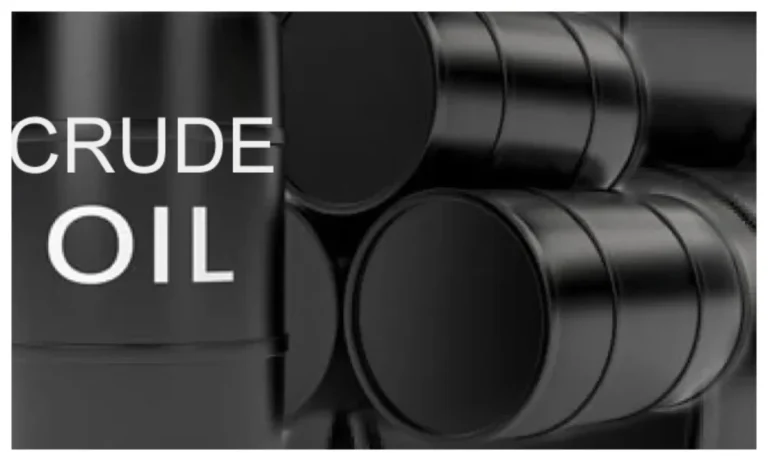
West Texas Intermediate crude rose 2.5 per cent to $85.51 per barrel, while Brent North Sea Crude climbed 2.8 per cent to $90.53 per barrel.
The dollar eased to 159.87 yen from 160.07 yen on Friday, while the euro slipped marginally to 1.1586. The pound rose to 1.3538, and the euro traded at 85.57 pence against the pound, compared with 85.58 pence on Friday.
On Wall Street, the Dow Jones Industrial Average closed flat at 53,559.99 points, while London’s FTSE 100 remained closed for the holiday.