
Dangote Refinery Threatens to Export Excess Petrol as Imports Complicate Demand Forecasting

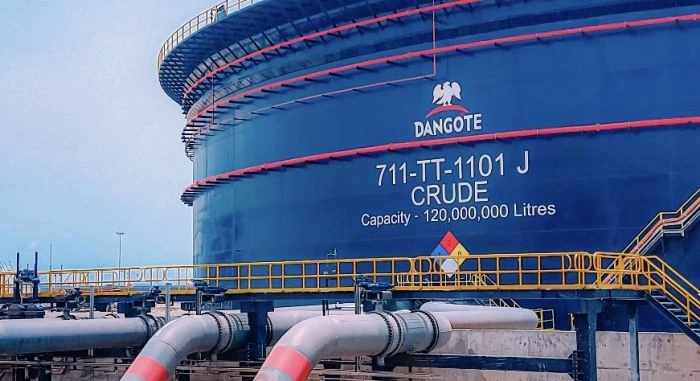
The Dangote Petroleum Refinery has warned that it may increase the export of excess petrol stocks as rising imports create uncertainty over domestic demand and make production and inventory planning increasingly difficult.
The refinery said imported Premium Motor Spirit (PMS), commonly known as petrol, accounted for approximately 43 per cent of total fuel supplied to the Nigerian market in July, despite its capacity to meet and exceed the country’s domestic petroleum needs.
According to the refinery, the continued issuance of petrol import licences has made it increasingly difficult to predict the volume of imported products that will enter the country.
This uncertainty, it said, is affecting production planning, inventory management and the amount of petrol it can reasonably keep in storage for the domestic market.
Imported Petrol Creates Inventory Challenges
Since beginning operations, the refinery said it has consistently maintained adequate petrol inventories and reserved product volumes to ensure uninterrupted supply to Nigerian consumers.
Maintaining those reserves, however, requires substantial investments in storage facilities, logistics and working capital.
The refinery said the lack of sufficient information about future import volumes means it cannot accurately determine how much additional petrol the domestic market will require.
“As a responsible energy provider, we have always endeavoured to keep adequate reserves to satisfy local demand at all times,” the refinery said in a statement on Wednesday.
It added that maintaining large inventories indefinitely had become commercially difficult in an environment where significant volumes of imported PMS continue to enter the market through regulatory-approved licences.
Excess Petrol Could Be Exported
The refinery said any petrol stocks that cannot be immediately absorbed by the Nigerian market may have to be exported to regional and international markets.
It stressed that the increase in its export volumes should not be interpreted as evidence that it lacks the capacity to supply Nigeria.
Instead, the refinery said exports are becoming necessary to manage excess inventories created by uncertainty surrounding imported fuel volumes.
“DPRP’s export volumes have increased in recent months, not because local demand cannot be met, but because excess inventory generated by market uncertainty must be evacuated to avoid unnecessary storage and financing costs.”
The company said holding excessive petrol stocks for prolonged periods creates significant storage and financing expenses, making it economically inefficient to maintain inventories without a clear understanding of future market demand.
Refinery Insists It Can Meet Domestic Demand
The Dangote refinery maintained that it remains capable of meeting and exceeding Nigeria’s petroleum product requirements.
It said it would continue investing in infrastructure and supply capabilities to ensure reliable fuel availability across the country.
However, the refinery warned that any future supply shortages caused by market distortions, including excessive imports and difficulties in accurately forecasting domestic demand, should not be attributed to its operations.
The company argued that local refiners need greater visibility into expected import volumes to make effective production and inventory decisions.
Calls for Better Market Coordination
The refinery called for greater transparency and improved coordination within Nigeria’s petroleum market, arguing that policies should encourage domestic refining and strengthen the country’s energy security.
It also urged policymakers to develop measures that would:
- Support local refining capacity.
- Improve petroleum market coordination.
- Reduce unnecessary foreign exchange outflows.
- Strengthen Nigeria’s energy security.
- Maximise the economic benefits of investments in domestic refineries.
The development highlights the growing tension between Nigeria’s expanding domestic refining capacity and continued petrol imports, with refiners facing the challenge of balancing local supply commitments against unpredictable market demand.
For Dangote Refinery, the immediate concern is ensuring that excess inventory does not translate into unnecessary storage and financing costs while maintaining its ability to supply the Nigerian market when demand requires it.