
The Federal Government has delivered 1,080 megawatts of additional electricity transmission capacity under its Presidential Power Initiative, popularly known as the Siemens power project.
This leaves 4,460 megawatts outstanding against the government’s target of adding 5,540MW to the national grid by 2028, The PUNCH reports.
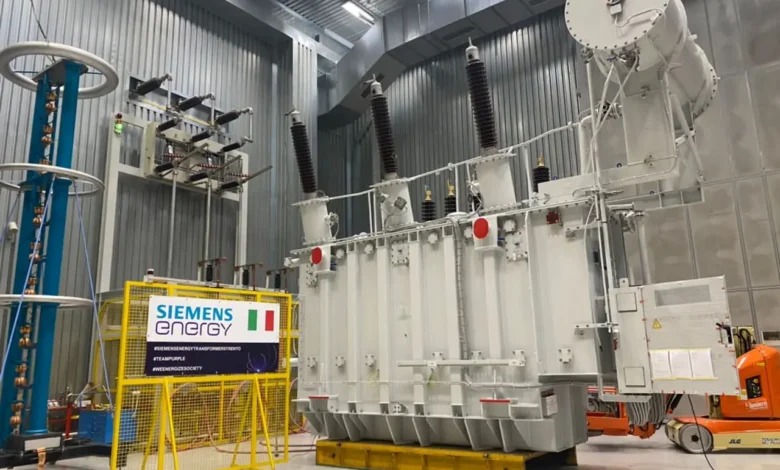
The 1,080MW transmission capacity was delivered through the installation of 10 mobile substations and 10 power transformers across 10 locations in the country.
This comes eight years after the deal was conceptualised in August 2018 during the visit of former German Chancellor Angela Merkel to Nigeria. The Federal Government and Siemens signed the implementation agreement in July 2019, formally setting the project in motion.
It said stations to deliver 3,376MW are in the pipeline, comprising the second batch of 12 substations and special projects, including the expansion of transmission infrastructure at Epe and Omotosho.
This means that although the Federal Government has completed its pilot phase, the bulk of the additional transmission capacity promised under the programme is still awaiting implementation, financing and other project approvals.
Details contained in a programme status document obtained from the FGN Power Company by our correspondent on Monday showed that the completed pilot phase involved the delivery of 10 power transformers and 10 mobile substations by Siemens Energy, providing 1,080MW of additional transmission wheeling capacity.
The equipment was deployed across 10 locations, including Ajah in Lagos, Ibadan in Oyo State, Sapade in Ogun State, Potiskum in Yobe State, Kwanar Dan-gora in Kano State, Jebba in Niger State, Okene in Kogi State, Apo in Abuja, Ihovbor in Edo State and Amukpe in Delta State.
As of November 2026, the initiative has lasted approximately eight years from conception and seven years since the formal implementation agreement was signed.
However, its execution has suffered repeated delays, with the original targets of increasing the country’s operational grid capacity to 7,000MW by 2021 and 11,000MW by 2023 not achieved.
The Federal Government subsequently signed an accelerated performance agreement with Siemens Energy in December 2023 to fast-track implementation.
The company said €60.4m in financing was secured for the pilot phase.
The document identified the pilot as the completed component of the programme, distinguishing it from the first batch of five substations currently being implemented and the second batch and other special projects still in the pipeline.
Under the first batch, the government plans to add another 984MW through the rehabilitation and upgrading of five existing transmission substations at New Abeokuta in Ogun State, Ayede in Ibadan, Oyo State, Offa in Kwara State, Onitsha in Anambra State and Sokoto in Sokoto State.
Siemens Energy is the engineering, procurement and construction contractor for the substation projects.
The programme also includes 16 transmission lines covering 606.5 kilometres of 330kV and 132kV networks, with a cumulative throughput capacity of 7,140MW.
The transmission lines comprise 399.5 kilometres of 132kV infrastructure and 207 kilometres of 330kV lines.
According to the document, the transmission line projects are expected to address bottlenecks preventing electricity generated by power plants from being efficiently evacuated through the national grid.
Two priority projects are the 38-kilometre 132kV Ajah-Shapaati transmission line and the five-kilometre 330kV Ayede-New Abeokuta line.
The government is targeting the completion of these priority lines by May 2027, subject to the conclusion of financing arrangements and other implementation requirements.
The document stated that the Federal Government had paid its 15 per cent counterpart funding for the transmission line programme, while negotiations on the facility agreement were ongoing.
Financial close is expected in the first quarter of 2027, with delivery of the 16 lines scheduled between the first quarter of 2027 and the fourth quarter of 2028.
The document further stated that the government is planning another 3,376MW through the second batch of the Siemens substation programme and special interventions.
The second batch involves 12 substations expected to contribute 2,400MW, while the Epe and Omotosho special projects are expected to provide another 976MW.
Other planned interventions include a dedicated transmission line for the State House, voltage-control equipment through the supply of shunt reactors and additional mobile substations at Okigwe and Ila-Orangun.
The document also listed projects at Jebba and Ganmo as part of the planned interventions.
However, the proposed projects are still at different stages of preparation, with the FGN Power Company identifying contract execution, financing, regulatory approvals and environmental assessments as outstanding requirements.
On financing, the programme is structured around 85 per cent funding from export credit agencies and development finance institutions, while the Federal Government provides the remaining 15 per cent as counterpart funding.
The Federal Ministry of Finance serves as the borrower and guarantor, with the funds expected to be on-lent to the Transmission Company of Nigeria and electricity distribution companies for repayment.
The financing partners include Sinosure, China Exim Bank, KfW IPEX-Bank, Commerzbank, Bpifrance, Standard Chartered and Deutsche Bank.
The document indicated that counterpart funding had been paid, while a €155.9m facility agreement was awaiting execution.