2027 Election: Peace Pact Signed, Campaigns Officially Begin — But Not Everyone Showed Up to Sign

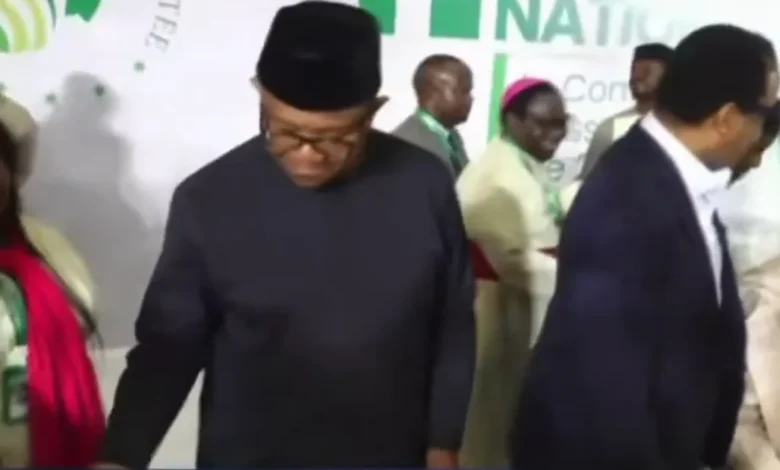
The countdown to 2027 is officially on. President Bola Tinubu and several other presidential candidates signed the first National Peace Accord for the 2027 general elections on Tuesday in Abuja timed deliberately for the eve of Wednesday, August 19, the official start date for presidential and National Assembly campaigns. But the ceremony made almost as much news for who wasn’t in the room as for who was.
What Was Actually Signed
The accord, organised by the National Peace Committee in partnership with The Kukah Centre, commits political parties, presidential candidates and their supporters to peaceful campaigns, respect for electoral institutions and issue-based engagement ahead of the elections. Signatories pledged to conduct issue-based campaigns and reject violence, hate speech, personal attacks, fake news and ethnic or religious incitement. Organisers described the document as more than ceremonial, anchoring it in the Constitution, the Electoral Act, and INEC’s own guidelines governing the electoral process.
The event was held at the Bola Ahmed Tinubu International Conference Centre in Abuja, with INEC Chairman Prof. Joash Amupitan present, and the National Peace Committee chaired by former Head of State General Abdulsalami Abubakar, with Bishop Matthew Hassan Kukah serving as convener.
Who Showed Up, and Who Didn’t
President Tinubu himself did not attend in person, being represented instead by Secretary to the Government of the Federation, George Akume, while APC National Chairman Nentawe Yilwatda also signed on the party’s behalf. Speaking through Akume, Tinubu committed himself and the APC to the accord’s tenets, declaring that the party “completely rejects violence, hate speech, and the deployment of modern tools to manipulate public opinion,” including the spread of misinformation “through artificial intelligence.”
Former Vice President Atiku Abubakar, now presidential candidate of the African Democratic Congress (ADC), was notably absent from the ceremony along with his party.
Among those who did attend and sign personally: Peter Obi, presidential candidate of the Nigeria Democratic Congress (NDC), and Adewale Adebayo of the Social Democratic Party. Omoyele Sowore, presidential candidate of the African Action Congress (AAC), also signed, alongside representatives of governorship and National Assembly candidates and various party chairmen.
What the Candidates Actually Said
Akume, delivering Tinubu’s remarks, urged: “Let us campaign on superior arguments and debate issues and promote the best policies. Election is not a do-or-die affair, win or lose, our country Nigeria must be the ultimate winner.”
Obi framed his own participation around reforming the political process itself: “Because I want to change the process, I have to go through it. You can’t answer his excellency without being an excellent person. The process that will make you answer his excellency should be excellent,” he said, adding that he had no fears heading into the election.
In his own address, Atiku’s message delivered despite his absence tasked political parties, candidates, campaign councils and spokespersons to campaign based on issues of significant concern to Nigerians, noting that with the election five months away and campaigns beginning the next day, all parties needed to commit to peaceful rallies “devoid of incitement, personal insults and abuse.”
Not Everyone’s Convinced This Will Hold
Some speakers used the occasion to question whether Nigeria’s electoral process is actually improving, pointing specifically to the recently concluded Osun governorship election and citing deaths recorded during that poll. INEC Chairman Amupitan himself expressed concern over the growing use of hate speech, misinformation, political polarisation and personal attacks in Nigerian campaigns, noting that political discourse has increasingly shifted away from policy and governance toward character attacks, identity-based mobilisation and inflammatory rhetoric urging candidates to refocus on issues actually affecting Nigerians.
What Happens Next
The National Peace Committee said this is only the first phase of the initiative a second phase will follow the 2027 elections themselves, focused specifically on acceptance of electoral outcomes and broader commitment to democratic stability. With campaigns now officially underway, the real test of the accord will be whether political parties and candidates actually translate Tuesday’s commitments into conduct on the ground across the country in the months ahead.
Wahala Network Take
Peace accords in Nigerian politics have a mixed track record good intentions on paper, mixed results on the campaign trail. With five months to go until the 2027 vote, some heavyweight signatures on the document, and at least one major absence already raising eyebrows, this is officially the start of a long, closely-watched race.
Buckle up. This one’s just getting started.